

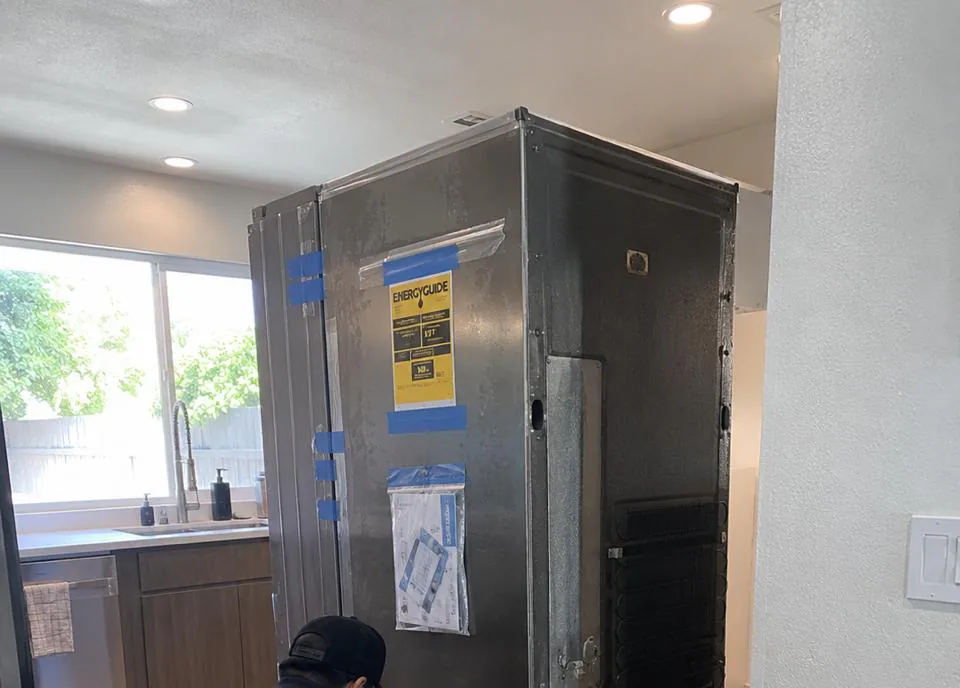
Salt Air Off the Pacific: Del Mar's Hidden Appliance Killer
Spend enough time fixing appliances within a few blocks of the surf and you stop being surprised by what the coast does. In Del Mar, the marine layer that rolls over the bluffs most mornings deposits a fine, conductive salt film on everything it touches, and an appliance breathes that air every time a fan kicks on. The result is a distinct pattern of failures you simply don't see in the inland valleys: refrigerator condenser coils that corrode and lose their ability to shed heat, control boards that develop creeping shorts as salt bridges the contacts, evaporator fan motors that seize early, and the steel cabinets of older units that bloom with rust from the inside out.
This is exactly why Vlad approaches a Del Mar diagnosis differently. Take a fridge that can't hold temperature in Crest Canyon or the Beach Colony: more often than not the compressor is fine, and the real trouble is coils so coated and corroded they can't dump heat, or a relay that's failing in slow motion. Cleaning and sealing buys real time, and on units with sealed coils he'll talk through where to add airflow so the appliance isn't fighting the climate. Cooking equipment near the water suffers in parallel, with igniters and bake elements that oxidize faster and door springs that lose tension as the metal fatigues. Once you know salt is in the equation, the order in which you check things changes, and that reordering is half of getting it right the first time.
Honest assessment counts for more here than almost anywhere else in the county. Sure, a salt-damaged board can be replaced, but if the corrosion has spread everywhere, throwing parts at an old unit is just a slow way to spend money. Vlad will tell you plainly when a coastal appliance has reached the end of the road versus when a targeted repair still has years left in it.