

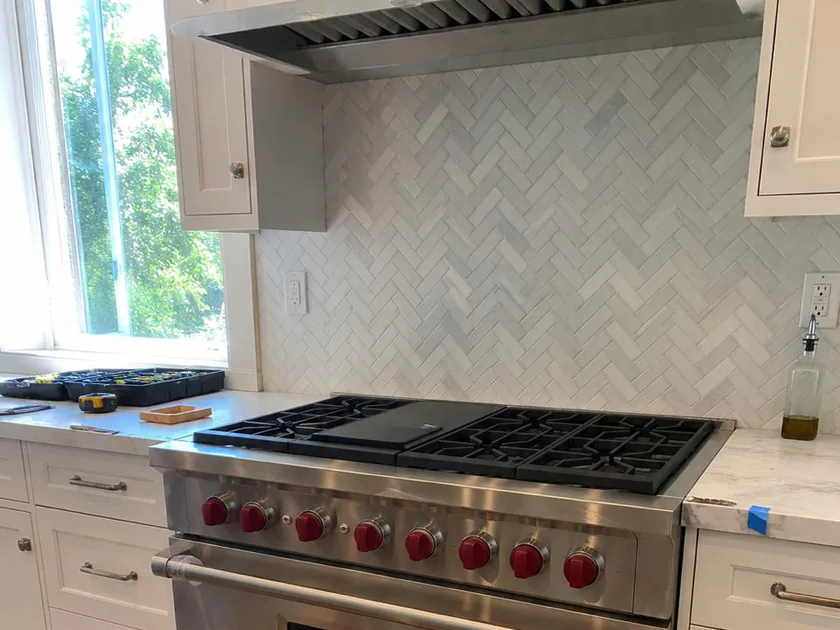
Installation. Range & Oven Installation Done to Code
Setting a range looks like sliding a box into a gap, but the part that matters is what's behind it. For gas units, that means a proper shutoff valve, a code-rated flexible connector — never reused, never overstretched — and a soap-bubble leak check on every joint before the unit ever gets pushed back. Electric and induction ranges live or die by the circuit: a standard coil range wants a 40- or 50-amp 240-volt line, and a lot of older El Cajon and Orange County kitchens simply weren't wired for the draw an induction cooktop pulls, so the breaker and gauge get verified first.
Slide-in models need the countertop cutout and side reveals dialed in so the front lip meets the counter cleanly, while freestanding units have to clear backsplashes and end panels. Dual-fuel ranges get both treatments at once — gas to the burners, 240-volt to the oven. On every job the anti-tip bracket goes in and gets tested by tugging the open oven door downward, because that bracket is what keeps a loaded range from pitching forward onto someone. The old unit gets hauled away, and Vlad fires up every burner and runs the oven through a bake cycle to confirm it all works before he packs up.